A family day out on Lough Neagh with light refreshments provided by
RBLNAC.
Well Done all those that
attended
It must be stressed that the
litter has been brought to the Island by floods and not left by
visitors. Visitors to the Island are usually very
cooperative and do not as a rule leave litter.
Rams Island Lough Neagh
Sunday 13th January 2013
First Visiting Canoeists of 2013
Jane(Jean) Cardwell Lyttle
Sat 6.10.12
This lady (93 years
old) is a
grandaughter of Jane
and Robert Cardwell
the last wardens to
live and die on Rams
Island in 1931 and
1929 respectively.
The ashes of her
sister Sadie who
lived on the Island
with Jane and Robert
when she was a child
were placed on the
Island last year.
A short video about the Woodcarvings on the Island
The River Bann & Lough
Neagh Association Co has produced a guide for the two major Islands
of Lough Neagh, Coney Island and Rams Island.
48 pages of information about the flora and fauna, history and a
small hint of scandal.
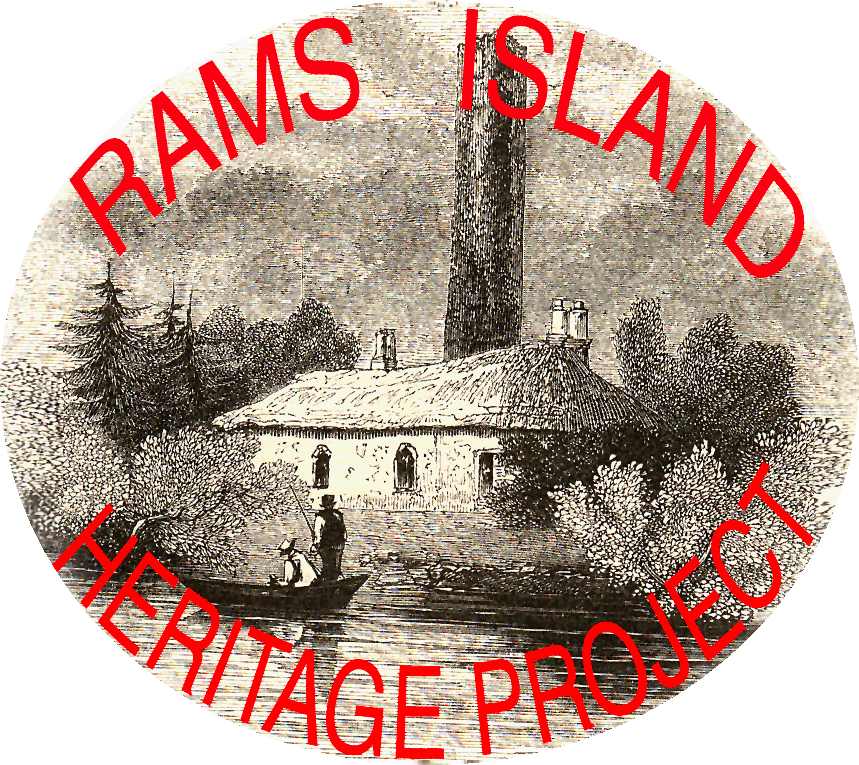
Ram's Island is located
approximately one mile offshore from Lennymore Bay and Sandy Bay on the
Eastern Shore of Lough Neagh. Rams is the largest island on Lough Neagh.
Lough Neagh was designated as an Area of Special Scientific Interest
(ASSI), a Special Protection Area and a Ramsar site in 1992, 1996 and
1976 respectively. It has been suggested that Rams was formed as a
Glacial Esker. It is nearly one mile long by a quarter of a mile wide at
the widest southern end. Notable features of the Island are a round
tower (a scheduled ancient monument 58:16, the remains of a Celtic
Monastic Settlement about a thousand years old) and the ruins of the
O’Neill’s’ nineteenth century summer house. The Island was last
permanently inhabited in the 1920s by the Cardwell family who were
caretakers for the O’Neill’s. The remains of Cardwell’s harbour, left
dry by the lowering of Lough Neagh, can be seen near the ruins of
Cardwell’s little house. The Island has quite a number of mature
deciduous trees including Oak, Ash, Alder, Willow, Birch, Beech,
Sycamore, Lime, Horse Chestnut, and unusually Walnut. There are Yew,
Snowdrops, Bluebells, Primrose, Lords and Ladies (Jack in the Pulpit),
Wild Mint, Wild Garlic, Lesser Celandine, Ferns and a carpet of
Daffodils, depending on the season. Fungi such as Scarlet Elf’s Cap and
Jelly Ear can also be found. There are also various Mosses and Lichens.
Although overgrown, there are remains of a carriageway along the
elevated central spine of the island. There are overgrown paths along
the entire length of the Island. Its remote, wilderness and ‘lost in
time’ qualities make Ram’s a pleasant and attractive place to visit.